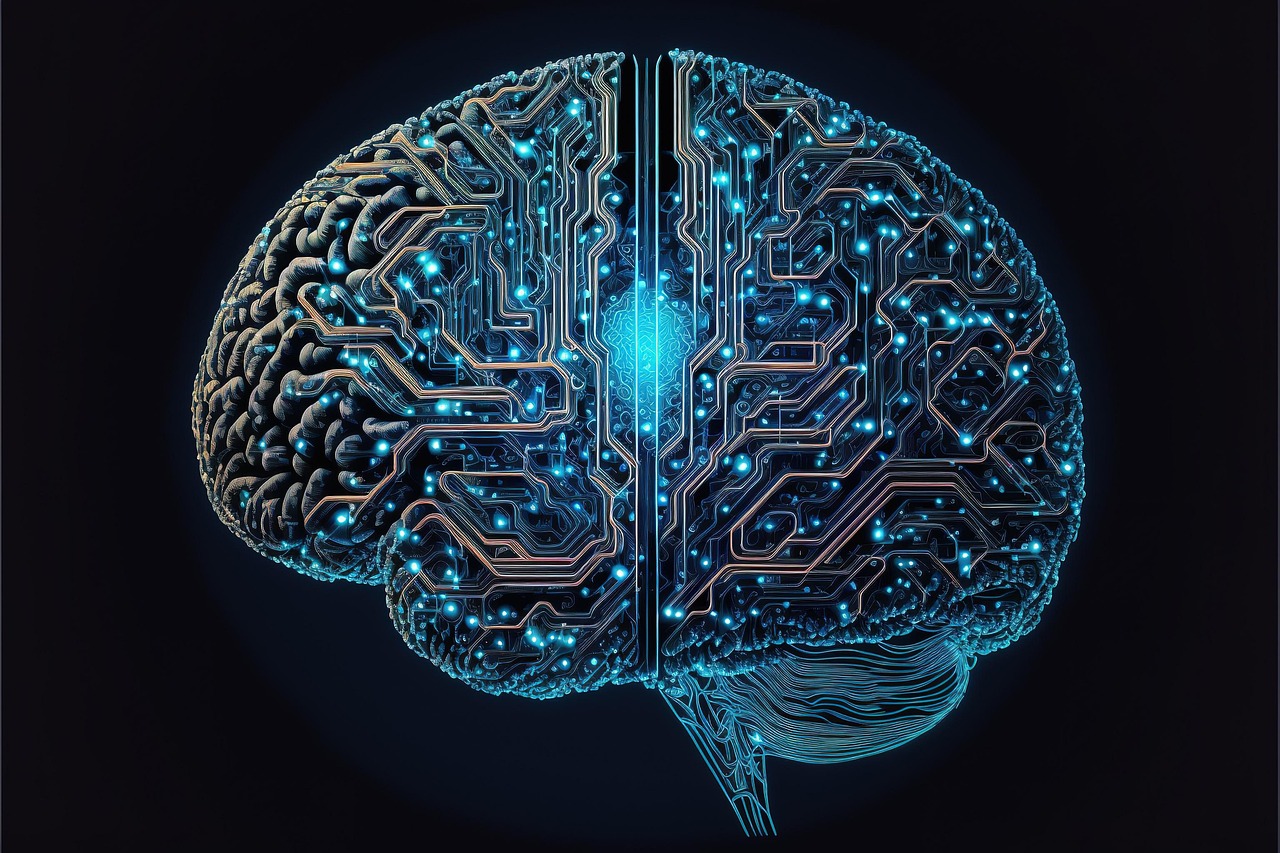
Discover the top new technology trends in 2026 including AI, robotics, quantum computing, clean energy, and smart cities. Learn how these innovations are shaping the future of our world.
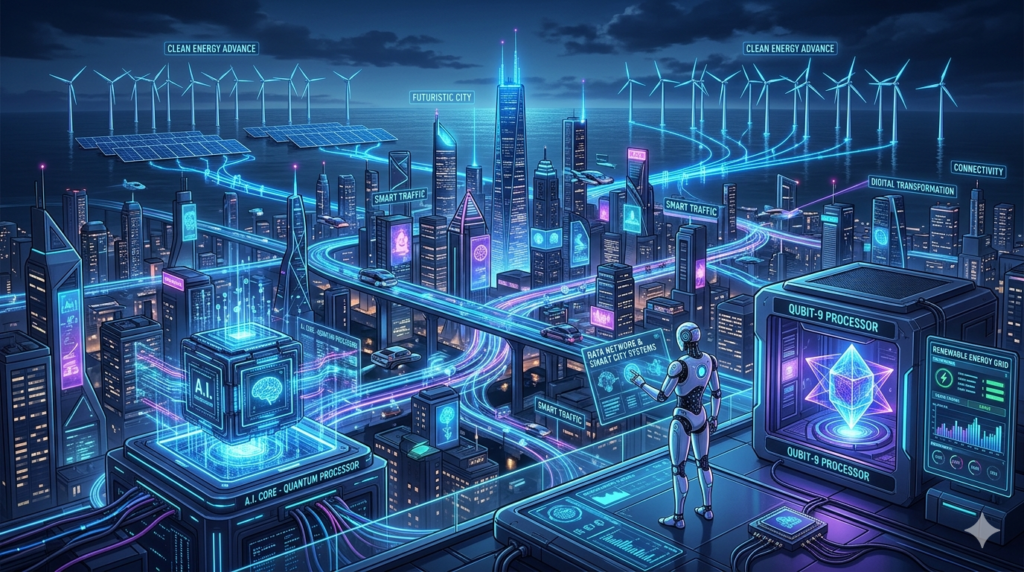
Technology has always moved forward, but the pace of innovation today feels different. Every year brings new breakthroughs, yet 2026 is shaping up to be a defining moment for technological progress. Artificial intelligence is becoming smarter, robots are entering real-world workplaces, and renewable energy systems are transforming how cities operate.
Not long ago, many of these ideas sounded like science fiction. Today, they are becoming part of everyday life. From healthcare to transportation, technology is quietly reshaping the way people live, work, and interact with the world.
So what exactly are the most important technology trends in 2026? Let’s explore the innovations that are redefining the future.
1. Artificial Intelligence Becomes a True Workplace Partner
Artificial intelligence is no longer just a futuristic concept. In 2026, AI has become an essential part of many industries. Businesses are using AI tools to analyze large datasets, automate repetitive tasks, and support decision-making.
For example, healthcare providers now rely on AI systems to help detect diseases earlier through medical imaging analysis. Financial institutions use AI to predict market trends and identify fraud. Even small businesses are using AI-powered assistants to improve customer service.
What makes modern AI different is its ability to understand context and collaborate with humans. Instead of replacing workers, AI is increasingly acting as a digital partner that enhances productivity.
According to research from MIT Technology Review, companies integrating AI tools into their workflows are seeing significant gains in efficiency and innovation.
Trusted source:
https://www.technologyreview.com
2. Humanoid Robots Enter the Real World
Robotics technology has advanced dramatically in recent years. In 2026, robots are stepping out of factories and into real-world environments.
Companies are developing humanoid robots capable of walking, lifting objects, and assisting humans with everyday tasks. These robots are being tested in warehouses, hospitals, and even retail stores.
Warehouse robots now help manage inventory with remarkable accuracy. In healthcare settings, robotic assistants support nurses by transporting supplies or monitoring patient data.
Organizations like Boston Dynamics and Tesla Robotics are leading the race to build robots designed to work safely alongside humans.
Trusted sources:
https://www.bostondynamics.com
https://www.tesla.com/AI
3. The Clean Energy Technology Boom
One of the most important technology trends in 2026 is the rapid expansion of renewable energy solutions.
Solar power systems have become more efficient and affordable. Wind farms are producing more electricity than ever before, and new battery technologies are solving the long-standing challenge of energy storage.
Next-generation batteries allow renewable energy to be stored for longer periods, making clean energy more reliable for cities and industries.
Electric vehicles are also benefiting from these innovations. Many modern EVs can now travel hundreds of kilometers on a single charge and recharge significantly faster than earlier models.
Organizations like the International Energy Agency (IEA) report that renewable energy capacity worldwide continues to grow each year.
Trusted source:
https://www.iea.org
4. Quantum Computing Breakthroughs
Quantum computing is often described as the next major leap in computing power. Unlike traditional computers that use binary bits, quantum computers use quantum bits (qubits) capable of processing multiple states simultaneously.
This allows quantum systems to solve extremely complex problems that would take traditional computers years to complete.
In 2026, major technology companies are investing heavily in quantum research. These systems are being explored for applications such as drug discovery, climate modeling, and cybersecurity.
Companies like IBM and Google Quantum AI are making significant progress toward building scalable quantum computers.
Trusted sources:
https://quantum-computing.ibm.com
https://quantumai.google
5. Smart Cities Powered by IoT
Cities around the world are becoming smarter thanks to connected technologies. Sensors, data platforms, and Internet of Things (IoT) devices are helping governments manage urban infrastructure more efficiently.
Smart traffic systems can adjust signals in real time to reduce congestion. Energy grids monitor electricity demand and distribute power more efficiently. Waste management systems automatically track when bins need collection.
These technologies are transforming urban environments into smart cities that are safer, more sustainable, and more efficient.
Research from McKinsey & Company shows that smart city technologies can significantly improve quality of life for residents.
Trusted source:
https://www.mckinsey.com
6. Extended Reality (XR) Reshapes Digital Experiences
Virtual reality and augmented reality are evolving into a broader ecosystem known as extended reality (XR).
XR blends the digital and physical worlds, creating immersive experiences for learning, collaboration, and entertainment.
Students can explore historical events through interactive simulations. Engineers can visualize complex machinery before building it. Remote teams can collaborate inside virtual environments that feel almost like physical meeting rooms.
As hardware becomes lighter and more powerful, XR technology is expected to play a major role in the future of work and education.
Trusted source:
https://www.gartner.com
7. Biotechnology Revolutionizes Healthcare
Biotechnology is one of the most transformative technology sectors in 2026. Scientists are developing innovative treatments that use genetic information to personalize healthcare.
Gene-editing tools like CRISPR are allowing researchers to explore treatments for genetic disorders. Meanwhile, AI-powered drug discovery is helping pharmaceutical companies develop new medicines faster.
Another major breakthrough area is mRNA technology, which researchers are exploring for vaccines and treatments for diseases such as cancer.
Organizations like the World Health Organization (WHO) continue to highlight biotechnology as a critical area for future healthcare innovation.
Trusted source:
https://www.who.int
8. Edge Computing Expands the Internet
As more devices connect to the internet, traditional cloud systems face increasing pressure. Edge computing solves this challenge by processing data closer to where it is generated.
Instead of sending all information to distant data centers, edge devices process data locally. This reduces latency and improves performance for applications such as autonomous vehicles, smart factories, and real-time analytics.
According to Cisco, edge computing will play a critical role in supporting the next generation of digital infrastructure.
Trusted source:
https://www.cisco.com
9. Cybersecurity Technologies Grow Stronger
With the rapid expansion of digital technologies, cybersecurity has become more important than ever.
New security systems use artificial intelligence to detect unusual behavior and prevent cyber attacks before they cause damage. Advanced encryption technologies are also helping protect sensitive data.
As businesses become more connected, investing in cybersecurity is no longer optional—it is essential for protecting digital infrastructure.
Organizations like Kaspersky and NIST are continuously developing new cybersecurity standards and research.
Trusted sources:
https://www.kaspersky.com
https://www.nist.gov
10. The Rise of Sustainable Technology
Sustainability is becoming a central focus for technology innovation. Companies are developing products and systems designed to reduce environmental impact while improving efficiency.
Examples include energy-efficient data centers, biodegradable materials, and AI systems that optimize energy consumption.
According to research from the United Nations Environment Programme, technology will play a crucial role in addressing global environmental challenges.
Trusted source:
https://www.unep.org
final thought in my opinion
The most fascinating part of the technology revolution in 2026 is how these innovations are starting to connect with each other.
Artificial intelligence powers robotics. Quantum computing accelerates scientific discovery. Smart cities rely on renewable energy and IoT systems. Biotechnology uses AI to discover new treatments.
This convergence of technologies is creating opportunities that were unimaginable just a decade ago.
The future will not simply be about smarter machines—it will be about building a smarter world for people.
As technology continues to evolve, the real challenge will be ensuring that innovation benefits society as a whole. When guided by responsible development and ethical thinking, the technologies emerging today have the potential to improve lives across the globe.
Curious about how humans can control computers with their thoughts? Read our complete guide on
Dive deeper into the science behind mind-controlled devices